
How Often Should Businesses Update Their Books of Accounts in 2026?
Learn how often businesses should update their books of accounts in 2026. Understand bookkeeping frequency, GST compliance risks, accounting best practices, financial reporting timelines, and compliance requirements for Indian businesses.
ACCOUNTING & BOOKKEEPING
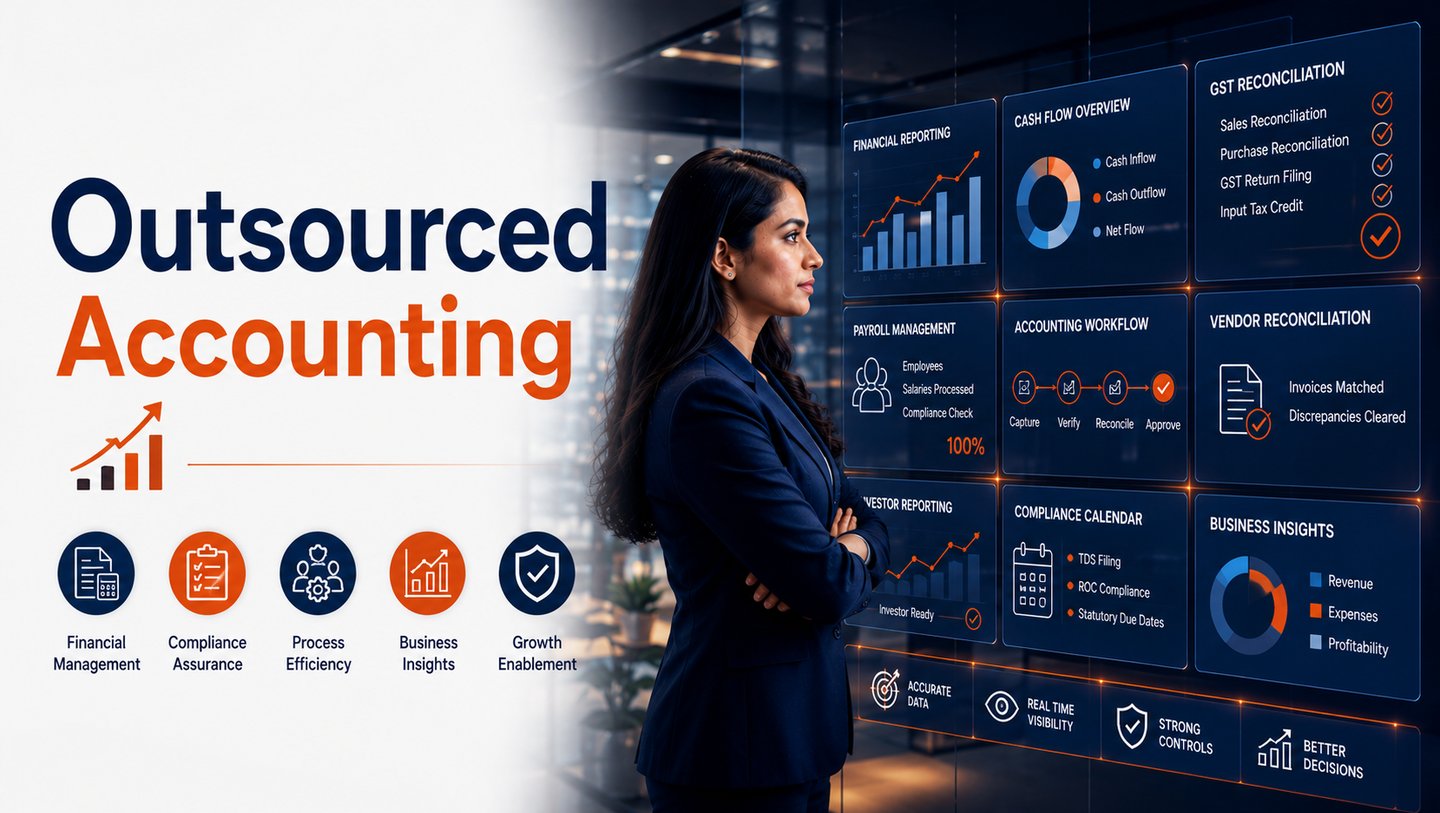

How Often Should Businesses Update Their Books of Accounts?
Introduction
Businesses operating in India’s increasingly digital and compliance-driven economy can no longer afford delayed bookkeeping practices. Financial records updated quarterly, half-yearly, or only during tax filing season create serious operational, taxation, audit, and compliance risks in 2026. Businesses today require accurate and continuously updated books of accounts to maintain GST compliance, support financial reporting accuracy, improve cash flow visibility, strengthen audit readiness, and reduce exposure to regulatory scrutiny.
The question is no longer whether businesses should maintain books of accounts regularly. The real question in 2026 is how frequently businesses should update accounting records to ensure operational efficiency and compliance resilience in an environment governed by automated tax analytics, AI-assisted scrutiny systems, digital audit trails, and integrated reporting frameworks.
Indian businesses now operate under interconnected compliance ecosystems regulated by the ICAI, CBDT, GSTN, and MCA. Delayed accounting entries, incomplete reconciliations, and inaccurate financial records increasingly trigger GST mismatches, TDS inconsistencies, tax notices, compliance penalties, and reporting complications.
Businesses across Gurugram, including companies operating in Cyber City, Udyog Vihar, Golf Course Road, and Sohna Road, increasingly adopt real-time bookkeeping systems and outsourced accounting structures because modern financial operations require continuous accounting visibility rather than year-end accounting adjustments.
Professionally updated books of accounts are no longer merely compliance records. Updated accounting data now functions as a real-time operational intelligence system influencing taxation, business strategy, investor confidence, banking relationships, budgeting, vendor management, and business scalability.
Latest Update 2026–2027: Why Regular Bookkeeping Has Become Critical
Indian compliance frameworks in 2026 rely heavily on digital verification and automated reconciliation systems.
Several developments have increased the importance of regularly updated books of accounts:
AI-assisted tax scrutiny by the Income Tax Department
GSTN-driven reconciliation monitoring
Mandatory e-invoicing frameworks
Real-time vendor compliance verification
Automated TDS analytics
Digital audit trails
Increased investor reporting requirements
Faster statutory audit expectations
Real-time MIS reporting demand
Expansion of cloud accounting systems
Businesses maintaining outdated or incomplete accounting records now face significantly higher operational and regulatory risks.
Modern accounting environments require:
Daily bookkeeping accuracy
Monthly reconciliation discipline
Real-time GST tracking
Timely payroll accounting
Structured financial reporting
Continuous compliance monitoring
Businesses depending on backlog accounting increasingly struggle with inaccurate financial visibility and compliance instability.
How Often Should Businesses Update Their Books of Accounts?
Businesses should ideally update their books of accounts daily or weekly depending on transaction volume, compliance exposure, and operational complexity.
Monthly bookkeeping is generally considered the minimum acceptable standard for businesses operating under GST, TDS, payroll, and ROC compliance obligations. However, growing businesses, ecommerce companies, startups, exporters, and businesses with high transaction volumes increasingly require real-time accounting systems.
The appropriate bookkeeping frequency depends on:
Business size
Transaction volume
Industry type
GST complexity
Payroll obligations
Vendor management scale
Reporting requirements
Investor expectations
Businesses delaying accounting updates until quarter-end or year-end often face severe reconciliation and compliance complications.
Why Regularly Updated Books of Accounts Matter in 2026
Updated books of accounts improve compliance accuracy, operational visibility, taxation management, financial reporting reliability, and strategic business decision-making.
Modern accounting systems are directly connected to:
GST filings
Payroll compliance
MCA filings
Audit documentation
Banking assessments
Investor reporting
Businesses maintaining outdated books frequently operate with inaccurate financial assumptions.
Regular Bookkeeping Improves GST Compliance
GST compliance depends heavily on accurate and timely bookkeeping.
Businesses failing to update books regularly often encounter:
GSTR-2B mismatches
Incorrect input tax credit claims
Vendor reconciliation failures
E-invoice inconsistencies
Delayed GST filing preparation
Professional GST Services integrated with structured bookkeeping systems improve:
Invoice matching
Vendor tracking
GST classification accuracy
Return filing readiness
ITC reconciliation
Real-time bookkeeping significantly reduces GST-related notice exposure.
Updated Books Improve Financial Decision-Making
Businesses cannot make reliable financial decisions using outdated accounting data.
Delayed bookkeeping frequently distorts:
Profitability analysis
Expense visibility
Cash flow planning
Budget forecasting
Tax estimation
Working capital assessment
Updated books of accounts improve management visibility into:
Revenue trends
Outstanding receivables
Vendor liabilities
Operational expenses
Business profitability
Financial reporting accuracy directly influences operational strategy quality.
Updated Books Support Audit Readiness
Businesses maintaining continuously updated books generally experience smoother audits.
Audit complications commonly arise because businesses fail to:
Maintain reconciliations
Organize documentation
Verify vendor ledgers
Match tax records
Track accounting adjustments
Professional accounting workflows maintain:
Audit-ready ledgers
Reconciliation reports
Supporting documentation
Tax records
Financial statements
Updated accounting records reduce year-end audit stress substantially.
Ideal Bookkeeping Frequency Based on Business Type
Different businesses require different accounting update frequencies depending on operational complexity and transaction volume.
Startups and Service Businesses
Startups and consulting businesses should ideally update books weekly or bi-weekly.
Reasons include:
Investor reporting requirements
Expense monitoring
Burn-rate analysis
Payroll tracking
Tax planning
Startups preparing for funding rounds generally require real-time financial visibility.
Ecommerce Businesses
Ecommerce companies should update books daily.
Ecommerce accounting involves:
Marketplace reconciliation
Refund tracking
Payment gateway reconciliation
Multi-state GST accounting
Inventory adjustments
Delayed bookkeeping creates significant reconciliation complications in ecommerce operations.
Manufacturing Businesses
Manufacturing businesses generally require daily or weekly accounting updates because production operations involve:
Inventory accounting
Raw material tracking
Vendor reconciliation
Cost accounting
Production expense allocation
Delayed accounting reduces operational cost visibility.
Small Businesses and Retail Businesses
Small businesses with lower transaction volume may operate effectively using weekly bookkeeping systems.
However, monthly bookkeeping updates should remain the minimum standard for GST-compliant businesses.
Common Problems Caused by Delayed Bookkeeping
Delayed bookkeeping creates operational confusion and compliance exposure across multiple business functions.
GST Reconciliation Problems
Businesses maintaining backlog accounting often struggle with:
Missing invoices
Incorrect GST reporting
Vendor mismatches
ITC reversals
Delayed filing preparation
GST reconciliation becomes significantly more difficult when accounting records remain outdated.
Cash Flow Mismanagement
Businesses operating without updated accounting records frequently lose visibility into:
Outstanding receivables
Vendor dues
Tax liabilities
Salary obligations
Operational expenses
Poor cash flow visibility increases financial stress and payment delays.
Income Tax Reporting Errors
Income tax computations depend heavily on accurate accounting records.
Delayed bookkeeping commonly causes:
Incorrect expense claims
TDS mismatches
Inaccurate profitability reporting
Tax estimation errors
The Income Tax Department increasingly uses AI-assisted analytics to identify accounting inconsistencies.
Audit Delays and Compliance Stress
Businesses updating books only during year-end audits often face:
Documentation gaps
Ledger mismatches
Vendor disputes
Compliance delays
Increased audit costs
Continuous accounting updates reduce audit complexity substantially.
Industry Context: Why Businesses in Gurgaon Prefer Real-Time Accounting
Businesses operating in Gurugram increasingly adopt real-time bookkeeping systems because the region’s commercial ecosystem operates at high transaction speed and compliance intensity.
Industries driving demand for structured accounting systems include:
Startups
SaaS companies
Ecommerce businesses
Consulting firms
Manufacturing units
Healthcare companies
Logistics businesses
Export-import firms
Businesses across Cyber City and Udyog Vihar increasingly require:
Real-time MIS reporting
Investor-ready financials
GST reconciliation accuracy
Payroll compliance monitoring
Financial dashboards
Delayed bookkeeping no longer supports the operational speed of Gurgaon’s business environment.
How Outsourced Accounting Helps Maintain Updated Books
Professional outsourced accounting systems help businesses maintain disciplined bookkeeping workflows through structured accounting processes and cloud-based financial infrastructure.
Outsourced Accounting Enables Continuous Bookkeeping
Professional Accounting Services typically include:
Daily bookkeeping
Vendor reconciliation
Bank reconciliation
GST tracking
Payroll accounting
Financial reporting
Structured workflows improve reporting consistency and operational discipline.
Cloud Accounting Systems Improve Real-Time Visibility
Cloud accounting platforms such as:
Tally Prime
Zoho Books
QuickBooks
SAP Business One
help businesses maintain:
Real-time financial visibility
Multi-location coordination
Digital documentation
Automated reconciliations
Faster reporting cycles
Technology-driven accounting improves operational transparency significantly.
Professional Review Systems Reduce Errors
Professional accounting firms maintain layered review mechanisms involving:
Ledger verification
GST reconciliation
TDS checks
Financial statement reviews
Vendor validation
Structured reviews reduce accounting inaccuracies and compliance risks.
Common Mistakes Businesses Make While Updating Books of Accounts
Updating Books Only During Tax Filing Season
Many businesses postpone accounting updates until GST filing deadlines or year-end audits.
Reactive bookkeeping creates:
Reconciliation chaos
Compliance pressure
Reporting inaccuracies
Tax planning limitations
Continuous accounting systems improve long-term financial discipline.
Ignoring Vendor Reconciliation
Vendor mismatches remain one of the most common bookkeeping failures.
Businesses frequently fail to:
Match purchase entries
Verify GST filings
Track credit notes
Reconcile payment adjustments
Structured reconciliation processes improve accounting accuracy.
Depending Entirely on Manual Accounting Systems
Manual bookkeeping increases the risk of:
Data duplication
Entry errors
Reporting delays
Documentation gaps
Cloud-based accounting infrastructure improves accounting efficiency significantly.
Strategic Recommendations for Businesses
Businesses seeking stronger accounting discipline should adopt structured bookkeeping strategies aligned with modern compliance environments.
Maintain Daily or Weekly Accounting Updates
Businesses should avoid backlog accounting completely.
Daily or weekly updates improve:
Financial visibility
GST accuracy
Vendor reconciliation
Cash flow management
Audit readiness
Implement Cloud-Based Accounting Systems
Cloud accounting platforms improve:
Reporting accessibility
Workflow automation
Multi-user coordination
Financial transparency
Technology-driven accounting systems are becoming essential rather than optional.
Integrate Bookkeeping With Compliance Functions
Businesses should integrate bookkeeping with:
GST Services
Payroll Services
Tax Filing Services
ROC Compliance support
Virtual CFO Services
Integrated financial workflows improve operational efficiency.
Expert Commentary: Why Updated Books of Accounts Are Becoming a Strategic Business Requirement
Books of accounts are no longer merely statutory records maintained for taxation purposes. Modern businesses increasingly depend on continuously updated accounting systems to support operational intelligence, strategic planning, investor communication, compliance management, and financial governance.
Businesses operating with outdated books frequently make decisions using inaccurate financial assumptions.
Continuous bookkeeping systems improve:
Business transparency
Financial discipline
Compliance readiness
Audit preparedness
Strategic planning quality
Indian businesses are rapidly transitioning toward cloud-enabled and outsourced accounting ecosystems because modern compliance environments demand real-time accounting visibility rather than retrospective financial reconstruction.
Businesses implementing structured bookkeeping systems today are generally better positioned for sustainable growth, investor confidence, and regulatory resilience.
Frequently Asked Questions (FAQs)
How often should businesses update their books of accounts?
Businesses should ideally update their books daily or weekly depending on transaction volume and compliance complexity. Monthly bookkeeping should be considered the minimum acceptable standard for GST-compliant businesses.
Why is regular bookkeeping important in 2026?
Regular bookkeeping is important because GST compliance, tax reporting, financial visibility, audit readiness, and investor reporting now depend heavily on accurate and continuously updated accounting records.
Can delayed bookkeeping create GST problems?
Delayed bookkeeping often creates GST mismatches, ITC reconciliation errors, vendor disputes, filing delays, and inaccurate tax reporting that may increase notice exposure.
Should startups maintain real-time bookkeeping?
Startups benefit significantly from real-time bookkeeping because accurate financial visibility improves investor reporting, expense tracking, cash flow monitoring, and financial planning.
What bookkeeping frequency is ideal for ecommerce businesses?
Ecommerce businesses should ideally maintain daily bookkeeping because marketplace reconciliation, payment gateway tracking, refunds, and multi-state GST accounting involve high transaction complexity.
How does outsourced accounting help maintain updated books?
Professional outsourced accounting firms maintain structured workflows involving bookkeeping, reconciliations, GST tracking, payroll accounting, and financial reporting that improve accounting discipline and reporting accuracy.
What are the risks of updating books only at year-end?
Year-end bookkeeping often creates audit stress, compliance delays, GST mismatches, documentation gaps, tax planning limitations, and inaccurate financial reporting.
Can cloud accounting systems improve bookkeeping accuracy?
Cloud accounting systems improve bookkeeping accuracy through automation, real-time reporting, digital documentation, reconciliation support, and multi-user coordination.
Why do businesses in Gurgaon prefer real-time accounting systems?
Businesses in Gurugram increasingly prefer real-time accounting because the region’s fast-growing commercial ecosystem requires stronger financial visibility, GST accuracy, and investor-ready reporting systems.
Which services should businesses integrate with bookkeeping?
Businesses commonly integrate bookkeeping with GST Services, Payroll Services, ROC Compliance support, Tax Filing Services, and Virtual CFO advisory for stronger financial governance.
Conclusion
Businesses operating in India’s modern compliance ecosystem can no longer rely on delayed or reactive bookkeeping systems. Updated books of accounts have become essential for maintaining GST compliance, financial transparency, audit readiness, tax accuracy, and strategic operational visibility.
Businesses maintaining continuously updated accounting systems generally achieve:
Better compliance discipline
Stronger cash flow management
Improved financial reporting
Faster audit readiness
Reduced tax risk exposure
Better investor confidence
Organizations across Gurugram increasingly adopt cloud-based and outsourced accounting systems because modern business environments require real-time financial intelligence rather than year-end accounting adjustments.
Acumen Financial Solutions supports businesses through structured bookkeeping workflows, compliance-focused Accounting Services, GST reconciliation systems, Payroll Services, Tax Filing Services, Virtual CFO advisory, and cloud-enabled financial reporting frameworks designed for modern Indian business operations.