
How Can Businesses Avoid Tax Penalties Through Proper Tax Compliance in India (2026–2027)?
Learn how businesses in India can avoid GST notices, ROC penalties, tax scrutiny, and compliance risks through proper accounting, reconciliations, and regulatory systems. Expert guide for businesses seeking long-term financial and legal stability.
GST COUNSULTANT
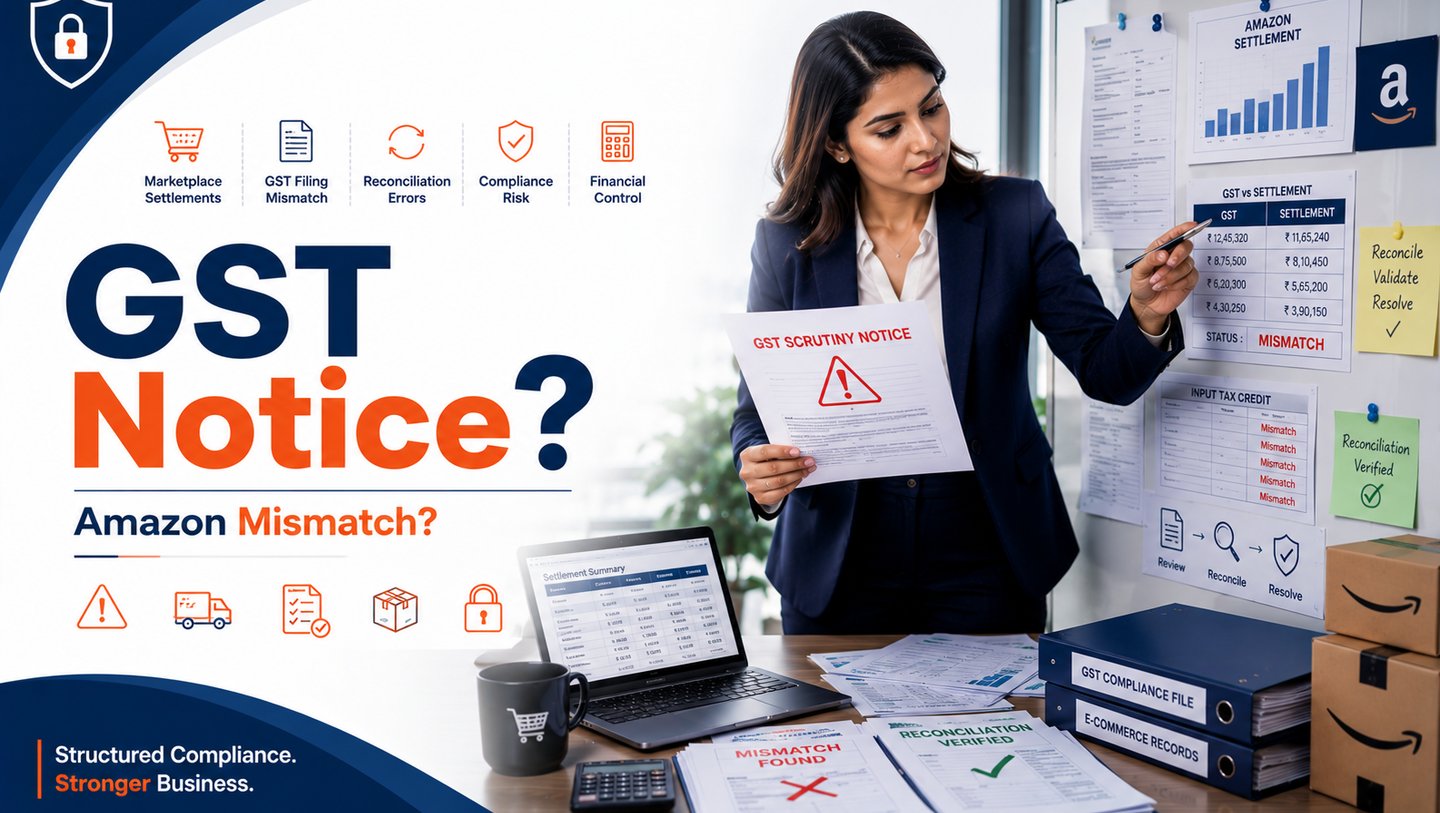

How Can Businesses Avoid Tax Penalties Through Proper Tax Compliance in India (2026–2027)?
- Learn how businesses in India can avoid GST notices, ROC penalties, tax scrutiny, and compliance risks through proper accounting, reconciliations, and regulatory systems. Expert guide for businesses seeking long-term financial and legal stability.
One of the biggest misconceptions among business owners is that tax penalties happen only when taxes are intentionally avoided.
In reality, most penalties in India happen because of:
Incorrect filings
Delayed compliance
GST mismatches
Weak accounting systems
Poor documentation
Vendor reconciliation failures
In 2026–2027, India’s compliance environment has become far more technology-driven. GST systems, e-invoicing platforms, MCA filings, AIS reporting, TDS records, and banking transactions are increasingly interconnected through automated data validation systems.
This means even small compliance mistakes can trigger:
GST notices
ITC reversals
Interest liabilities
ROC penalties
Income tax scrutiny
That is why businesses today must focus on preventive compliance systems instead of reactive corrections.
The first step to avoiding penalties is maintaining accurate accounting records.
Many businesses still operate with:
Delayed bookkeeping
Unstructured invoice management
Incomplete reconciliations
Manual tracking systems
This creates reporting inconsistencies across:
GST returns
Financial statements
TDS filings
Vendor records
Once mismatches begin, compliance risks increase rapidly.
A structured accounting and compliance process like the systems explained here:
https://acumenca.in/services/
helps businesses maintain consistency across financial and tax reporting systems.
Another major reason businesses face penalties is GST reconciliation failure.
In practical experience, businesses commonly face notices due to:
GSTR-1 and GSTR-3B mismatches
Incorrect Input Tax Credit claims
Vendor non-compliance
E-invoice inconsistencies
Wrong HSN classifications
A proper compliance system includes:
Monthly reconciliations
Vendor compliance verification
Invoice validation
ITC tracking systems
Timely return filing controls
This significantly reduces penalty exposure.
Timely filing is another critical area.
Many businesses underestimate the cumulative impact of:
Interest liabilities
Late fees
Compliance defaults
Repeated delays gradually damage business credibility and increase the risk of regulatory scrutiny.
Businesses with strong compliance discipline usually experience:
Better banking relationships
Stronger investor confidence
Easier loan approvals
Lower legal risks
Another important factor is documentation management.
Businesses often lose cases or face penalties not because taxes were unpaid, but because supporting documentation was incomplete.
Professional compliance systems maintain:
Invoice records
Agreements
Tax working papers
Reconciliation reports
Audit trails
This creates financial transparency and regulatory defensibility.
Modern businesses are also increasingly implementing:
Automated accounting systems
Real-time compliance dashboards
E-invoicing integrations
Cloud-based financial monitoring
These systems improve accuracy and reduce manual compliance errors.
You can understand how structured financial systems improve operational performance here:
https://acumenca.in/case-studies/
From practical industry experience, businesses usually seek professional compliance support after facing:
GST notices
Input Tax Credit reversals
ROC non-compliance
Tax scrutiny
Cash flow disruptions due to penalties
However, the real solution is not only solving notices.
The real solution is building preventive financial and compliance systems.
The methodology behind structured compliance-focused financial management can be understood here:
https://acumenca.in/about-us/
Businesses working with professional compliance advisory firms generally benefit from:
Better compliance accuracy
Reduced legal exposure
Lower penalty risks
Improved financial reporting
Better audit readiness
Stronger operational control
Higher business credibility
However, businesses should also understand one important reality.
Not every accountant or consultant provides strategic compliance expertise.
Many only file returns without monitoring the underlying financial systems creating compliance risks.
Businesses should work with professionals who understand:
GST frameworks
Income tax systems
ROC compliance
Financial reconciliations
Risk monitoring
Regulatory reporting systems
This is why businesses increasingly work with structured advisory firms like Acumen Financial Solutions for compliance-oriented financial management and operational support.
In conclusion, avoiding tax penalties in India is no longer only about filing returns.
It is about building disciplined accounting, reconciliation, reporting, and compliance systems that align with evolving regulatory frameworks.
Businesses that invest in proper compliance systems today are not only avoiding penalties — they are building long-term financial stability, operational credibility, and sustainable growth.