
How can avoid GST penalties for business?
Avoiding GST penalties is not about doing something extraordinary. It is about building discipline, accuracy, and a system that does not allow mistakes to happen. After working with businesses for decades, I can tell you this clearly: Most GST penalties are not due to fraud. They are due to carelessness, delays, and mismatches. If you control these three areas, penalties almost disappear.
GST COUNSULTANT

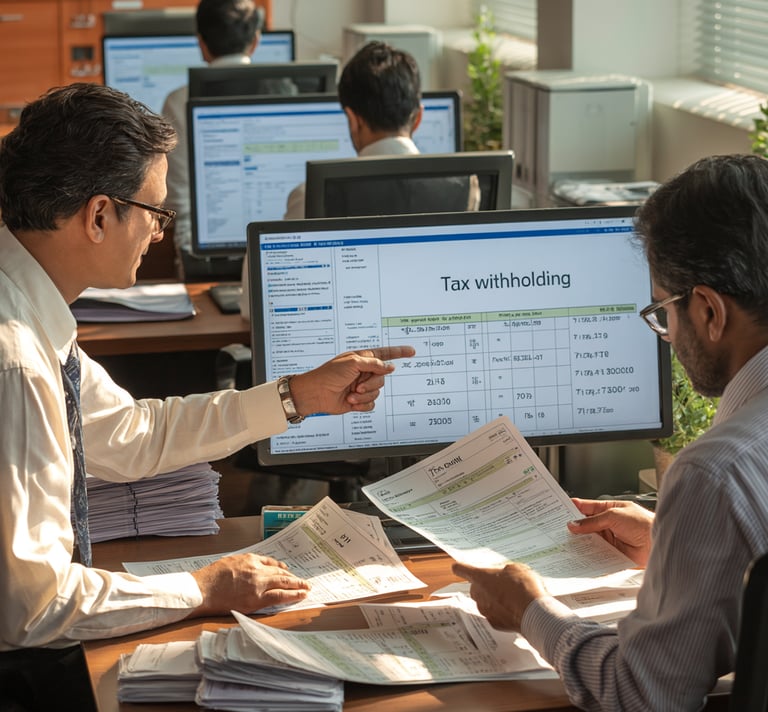
Avoiding GST penalties is not about doing something extraordinary. It is about building discipline, accuracy, and a system that does not allow mistakes to happen.
After working with businesses for decades, I can tell you this clearly:
Most GST penalties are not due to fraud. They are due to carelessness, delays, and mismatches.
If you control these three areas, penalties almost disappear.
1. Never delay return filing
This sounds basic, but it is the most common mistake.
Even a profitable and well-managed business ends up paying penalties simply because:
GSTR-1 or GSTR-3B was filed late
Payment was delayed by a few days
GST is a time-bound system. Once you miss a due date:
Late fees apply automatically
Interest starts accumulating
There is no negotiation here. Discipline is the only solution.
2. Ensure your books and GST returns always match
One of the biggest triggers for notices is mismatch between:
Your accounting records
GSTR-1 (sales data)
GSTR-3B (tax liability)
If your books say one thing and your return says another, the system flags it.
To avoid this:
Reconcile your sales before filing
Do not file returns in a hurry
Verify numbers, not just totals
3. Control your Input Tax Credit (ITC) carefully
Incorrect ITC claims are a major reason for penalties.
Before claiming ITC, always check:
Whether the invoice is reflected in GSTR-2B
Whether the supplier has filed their return
Whether the invoice details are correct
If ITC is claimed without proper validation, you may have to:
Reverse the credit
Pay interest
Face penalties
4. Do monthly GST reconciliation without fail
Do not wait for year-end or notices.
Every month, reconcile:
Purchase data with GSTR-2B
Sales data with GSTR-1
Tax liability with GSTR-3B
This simple habit prevents 80% of GST problems.
5. Maintain proper documentation
In GST, if you cannot prove it, it does not exist.
Always maintain:
Proper tax invoices
E-way bills where required
Payment records
Vendor details
During scrutiny or audit, documentation becomes your strongest defense.
6. Monitor your vendors’ compliance
Your compliance depends on your vendors too.
If your vendor:
Does not file returns
Files incorrect data
Your ITC may not appear in GSTR-2B.
This means:
You lose credit
Your tax liability increases
Work only with compliant vendors and review them periodically.
7. Understand GST before taking business decisions
Many penalties happen because business decisions are taken without understanding GST impact.
For example:
Wrong classification of goods/services
Incorrect GST rate applied
Improper treatment of advances
Every such mistake eventually shows up in returns.
8. Plan GST payments with your cash flow
A common issue is:
GST becomes payable
But cash is not available
This leads to delayed payment and interest.
Always:
Track receivables
Plan GST outflow in advance
GST is not an expense. It is a liability you are holding on behalf of the government.
9. Do not treat GST as a last-minute activity
Many businesses prepare GST returns at the last moment.
This leads to:
Errors
Missing invoices
Wrong ITC claims
GST requires continuous tracking, not last-day preparation.
10. Use a structured system, not manual effort
As your business grows, manual tracking fails.
You need:
Regular bookkeeping
Automated reconciliation
Proper review process
This is where most businesses either become compliant or start facing penalties.
Final practical understanding
If I simplify it based on real experience:
You avoid GST penalties by ensuring:
Timely filing
Accurate data
Regular reconciliation
Controlled ITC
Proper documentation
One important truth
GST penalties are rarely due to lack of knowledge.
They are due to lack of system and discipline.
Once you build a structured process, GST becomes predictable and manageable.
In conclusion, do not focus on “how to handle penalties.”
Focus on building a system where penalties do not arise at all.
That is how professionally managed businesses operate.